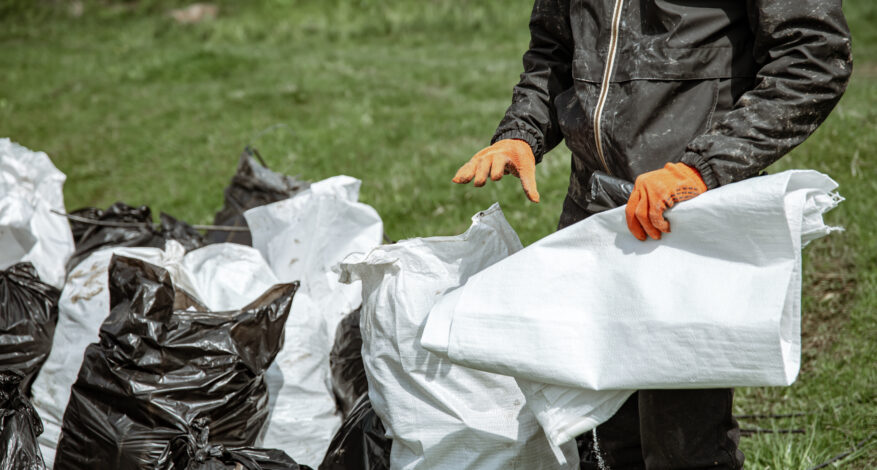
Ground conditions can change the way a project needs to approach erosion, slope stability, and water exposure. Loose soil, heavy rainfall, flowing water, and irregular terrain can make conventional protection methods difficult to install or maintain. This is where geotextile bags in Kuwait can provide a practical solution for demanding civil and environmental applications.
What Are Geotextile Bags?
Geotextile bags are strong fabric containers designed to be filled with materials such as sand or soil. They are made using high-strength geotextile fabrics, including polypropylene or polyester, and are designed to withstand demanding environmental conditions.
Unlike ordinary bags, geo bags are engineered for applications where soil retention, erosion control, and structural support are important. Their flexibility also allows them to adapt to slopes, curves, and uneven ground.
Why Are Geotextile Bags Useful on Difficult Ground?
1. They Help Control Soil Erosion
Water movement can gradually remove soil from riverbanks, embankments, slopes, and other exposed areas. Geotextile bags help hold fill material in place and reduce soil washout.
This makes them useful for erosion control where continuous exposure to rainfall or water flow can weaken unprotected ground.
2. They Adapt to Irregular Terrain
One challenge with rigid structures is fitting them to naturally uneven ground. Geotextile bags can be shaped and stacked according to the terrain.
They can be positioned along slopes, curves, and other irregular surfaces, making installation more adaptable to the conditions at the project site.
3. They Provide a Permeable Protective Layer
A useful characteristic of geotextile bags is their ability to allow water to drain through the material while helping retain soil and fill. This can reduce waterlogging and hydrostatic pressure while limiting soil displacement.
For areas exposed to water, this balance between drainage and soil retention can be particularly valuable.
Where Can Geotextile Bags Be Used?
Depending on the project design, geotextile bags in Kuwait can be considered for applications such as:
- Riverbank and shoreline erosion control
- Slope stabilization
- Embankment protection
- Seawalls and breakwaters
- Underwater barriers
- Environmental and civil engineering projects
Their flexibility makes them suitable for locations where conventional rock, concrete, or other rigid solutions may not be practical.
What Should You Consider Before Choosing Geo Bags?
Not every project has the same ground conditions. Before selecting a product, consider the required bag size, fabric strength, filling material, exposure to sunlight and water, installation conditions, and expected loads.
It is also useful to request technical information and inspection documentation when project specifications require it. An experienced Sandbags Manufacturer in UAE can help buyers understand available specifications and select a product according to the intended application.
A Practical Solution for Challenging Ground
The value of geotextile bags lies in their combination of strength, flexibility, permeability, and adaptability. They can be filled with locally available sand or soil and arranged to suit different terrain and protection requirements.
For projects dealing with erosion, slopes, water movement, or irregular ground, geotextile bags in Kuwait offer an engineered approach that can support long-term site protection when properly selected and installed.
FAQs
- Are geotextile bags suitable for erosion control?
Yes. Geotextile bags can help control erosion by holding fill material in place and reducing soil washout. They are used for applications such as riverbanks, embankments, slopes, coastlines, and other areas exposed to water movement.
- Can geotextile bags be used on uneven slopes?
Yes. Their flexible construction allows them to be shaped, stacked, and positioned according to the terrain. This makes them useful for slopes, curves, embankments, and irregular surfaces where rigid protection systems may be difficult to install.
- What are geotextile bags filled with?
Geotextile bags can generally be filled with suitable materials such as sand or soil. The appropriate filling material depends on the project requirements, installation conditions, and intended application. Proper filling and placement are important for achieving the desired stability.
- How do geotextile bags differ from traditional sandbags?
Geotextile bags are engineered specifically for civil and environmental applications and use high-strength geotextile fabric. Traditional sandbags can serve temporary flood or protection purposes, while geo bags are commonly considered for erosion control, slope stabilization, and hydraulic structures.
- What should buyers check when sourcing geotextile bags in Kuwait?
Buyers should check fabric type, strength, dimensions, filling requirements, project application, technical specifications, and available inspection documentation. The expected exposure to water, sunlight, and mechanical loads should also be considered before selecting geotextile bags.