Security planning becomes more complicated when a site needs protection that can be deployed quickly, adapted to changing conditions, and used across different applications. Working with the right Military Barrier Supplier in the UAE can make this process more straightforward by providing practical barrier solutions suited to the site’s requirements.
What Makes a Military Barrier Useful for Security Planning?
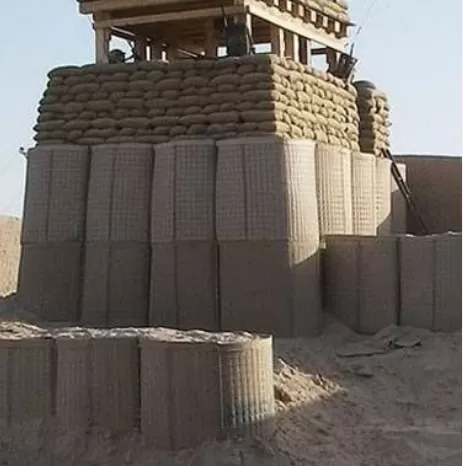
A military barrier is a modular, collapsible structure made from wire mesh and heavy-duty geotextile material. It can be filled with dry sand, soil, or other earthen material to create a protective wall or enclosure.
Unlike a fixed concrete structure, a modular barrier can be arranged in different configurations. This makes it useful for perimeter protection, military fortification, camp and base protection, checkpoints, guard posts, and other demanding environments.
How the Right Supplier Simplifies the Process
Choosing a supplier is not simply about finding a barrier that fits a specification sheet. The supplier should help align the product with the site’s practical requirements.
A suitable supplier can simplify planning by helping with:
- Barrier dimensions: Different panel sizes can accommodate different site layouts, with customized dimensions available for specific requirements.
- Material selection: Galvanized steel wire and heavy-duty, UV-stabilized geotextile contribute to durability in demanding environments.
- Deployment planning: Modular construction allows barriers to be assembled and positioned relatively quickly.
- Site flexibility: Barriers can be stacked, expanded, reshaped, or configured according to protection requirements.
- Filling requirements: Knowing that the barrier is designed for sand, soil, or earthen material helps planners prepare suitable filling resources.
These details can reduce uncertainty before installation begins.
Where Can Military Barriers Be Used?
A well-planned barrier system can serve several purposes depending on the site.
Common applications include:
- Military camps and forward operating bases
- Perimeter and defense walls
- Personnel and material bunkers
- Defensive firing positions
- Highway checkpoints
- Guard posts
- Oil and gas facilities
- Ammunition depots
- Flight lines
- Flood control areas
This versatility is one reason modular barriers can be considered during both security and emergency planning.
What Should You Ask a Military Barrier Supplier?
Before selecting a supplier, consider questions such as:
- What barrier dimensions are available?
- Can the configuration be customized?
- What materials are used for the mesh and geotextile?
- What filling material is required?
- Is the barrier suitable for the site’s environmental conditions?
- Can the supplier provide technical specifications for planning?
For projects in the Gulf region, working with a Defense Barrier Manufacturer in Bahrain or a supplier serving the wider GCC can also be relevant when procurement involves regional logistics and site requirements.
A Practical Approach to Better Security Planning
The most effective planning starts with the intended use rather than the product alone. Identify the area requiring protection, determine whether the barrier will be temporary or semi-permanent, assess the available filling material, and establish the required dimensions and configuration.
A reliable Military Barrier Supplier in UAE can then help match these requirements with an appropriate modular barrier solution, making procurement and deployment easier to coordinate.
Final Takeaway!
Good security planning depends on choosing solutions that work in real site conditions. Modular defense barriers provide flexibility, rapid deployment, durability, and multiple configuration options. By working with the right Military Barrier Supplier in UAE, project teams can make barrier selection more organized while preparing for changing security or environmental requirements.
FAQs
- What is a military defense barrier used for?
Military defense barriers are used for applications such as perimeter protection, camp security, checkpoints, bunkers, defensive positions, and other protective structures. They can also support flood control by helping contain or redirect water. - Can military barriers be customized for different sites?
Yes. Modular defense barriers are available in different panel dimensions and can also be customized according to project requirements. This allows planners to select configurations that better suit the available space and intended protection area. - What are military barriers filled with?
These barriers are designed to be filled with dry sand, soil, or other suitable earthen material. The filling material creates the mass needed for the barrier structure while allowing locally available resources to be considered during planning. - Are military barriers suitable for temporary security requirements?
Yes. Their modular and collapsible construction makes them suitable for temporary or semi-permanent applications. They can be installed, rearranged, and eventually removed when site requirements change or the protective structure is no longer required. - What should I consider when choosing a military barrier supplier?
Consider available dimensions, customization options, material specifications, deployment requirements, intended application, environmental conditions, and technical support. These factors can help ensure the selected barrier is appropriate for the project’s actual requirements.