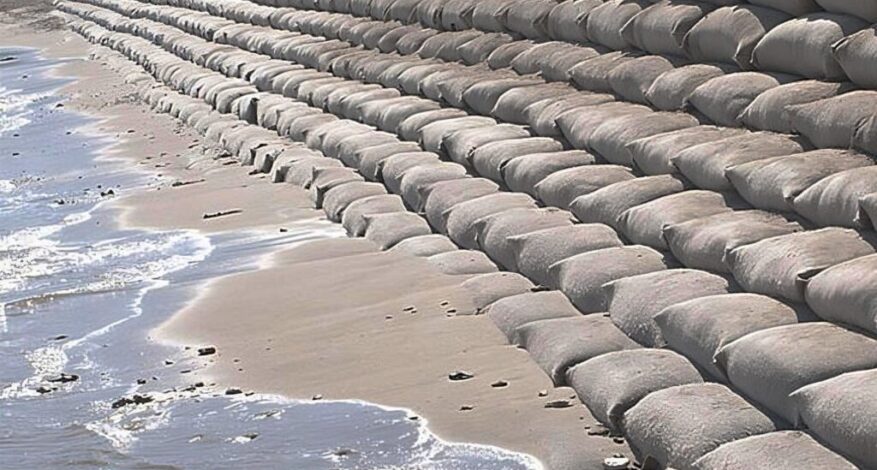
Construction zones rarely stay predictable for long. A sudden downpour, loose soil, shifting ground levels, or unexpected water flow can interrupt work within hours. That is why many contractors now rely on a trusted Geo sandbags supplier in UAE to create fast, adaptable protection systems that can be adjusted as site conditions change.
Unlike rigid barriers or permanent retaining structures, geo sandbags offer mobility, durability, and practical support for temporary projects. From roadwork areas to coastal developments, these engineered bags help construction teams maintain safer and more controlled environments without slowing down progress.
Why Temporary Construction Sites Need Flexible Protection?
Temporary construction locations face a unique challenge. The site layout often changes during different project phases. Excavation zones expand, equipment moves frequently, and weather conditions may shift unexpectedly. Traditional protective systems can become difficult to relocate or modify.
Geo sandbags solve this issue by offering a protective structure that can be positioned, stacked, reshaped, or removed with minimal disruption. Their adaptability makes them suitable for projects where conditions evolve week by week.
Many contractors also combine them with support materials sourced from a reliable PP sandbags supplier in Kuwait when lightweight containment solutions are required for internal site divisions and temporary soil retention.
How Geo Sandbags Improve Site Stability?
One of the strongest advantages of geo sandbags is their ability to control erosion and water movement around active work zones. Construction sites often expose loose soil surfaces that become vulnerable to runoff during rainfall.
Geo sandbags act as protective buffers by slowing water flow and stabilizing surrounding ground. This reduces soil displacement and helps preserve the structural integrity of nearby work areas.
They are especially useful for:
Slope Protection
Placed along embankments or uneven terrain, geo sandbags help prevent soil collapse and surface erosion.
Water Diversion
Temporary drainage paths can be created using stacked geo sandbags to redirect water away from machinery and excavation zones.
Edge Reinforcement
Construction pits and trench boundaries gain additional support through layered barrier placement.
In larger infrastructure projects, contractors may also integrate systems such as a Defense barrier in Qatar for high-capacity containment and reinforced perimeter security.
A Practical Option for Rapid Deployment
Construction timelines often leave little room for complicated installations. Geo sandbags are valued because they can be filled, transported, and positioned quickly without requiring extensive equipment.
This rapid deployment becomes particularly important during emergency weather conditions. Sudden flooding or shoreline erosion can threaten active work sites with very little warning.
In environmentally sensitive regions, many developers also explore Jute sandbags for flood protection in Oman because natural fiber materials offer temporary support while maintaining eco-conscious construction practices.
Cost Control Without Compromising Safety
Temporary sites demand solutions that balance protection with budget awareness. Permanent retaining systems may not always make financial sense for short-term projects.
Geo sandbags reduce installation costs while still delivering dependable site protection. Since they can often be reused across multiple project stages, contractors gain additional value over time.
Their modular structure also allows partial adjustments instead of complete replacements, helping project managers respond efficiently to changing site conditions.
Final Takeaway
Construction projects rarely unfold exactly as planned. Ground conditions shift, weather interferes, and operational priorities change constantly. Geo sandbags provide a level of flexibility that fixed protection systems simply cannot match.
Their ability to manage erosion, guide water flow, reinforce vulnerable areas, and adapt to evolving site layouts makes them an essential resource for temporary construction environments. As modern projects continue to demand practical and responsive safety measures, geo sandbags remain a dependable solution trusted across infrastructure and development sectors.
Frequently Asked Questions
Why are geo sandbags preferred for temporary construction projects?
Geo sandbags are easy to reposition, quick to install, and highly adaptable to changing site conditions. Their flexibility allows construction teams to manage erosion, water flow, and unstable terrain without relying on permanent protective systems.
Can geo sandbags handle heavy rainfall and flooding conditions?
Yes, geo sandbags are designed to resist water pressure and reduce soil displacement during heavy rain. When properly installed, they help redirect water flow and protect construction zones from erosion-related damage.
How are geo sandbags different from traditional sandbags?
Geo sandbags are manufactured using engineered geotextile materials that offer improved durability, filtration, and structural performance. Traditional sandbags may provide short-term support, but geo sandbags deliver greater stability for demanding site conditions.
Are geo sandbags environmentally suitable for sensitive areas?
Many geo sandbag solutions are designed for environmentally responsible applications. Some projects use biodegradable alternatives like jute sandbags to provide temporary flood control while reducing long-term environmental impact in coastal or natural zones.
Can geo sandbags be reused after construction work is completed?
In many cases, geo sandbags can be reused if they remain structurally intact after deployment. Their reusable nature helps contractors reduce material waste and improve cost efficiency across multiple project phases.